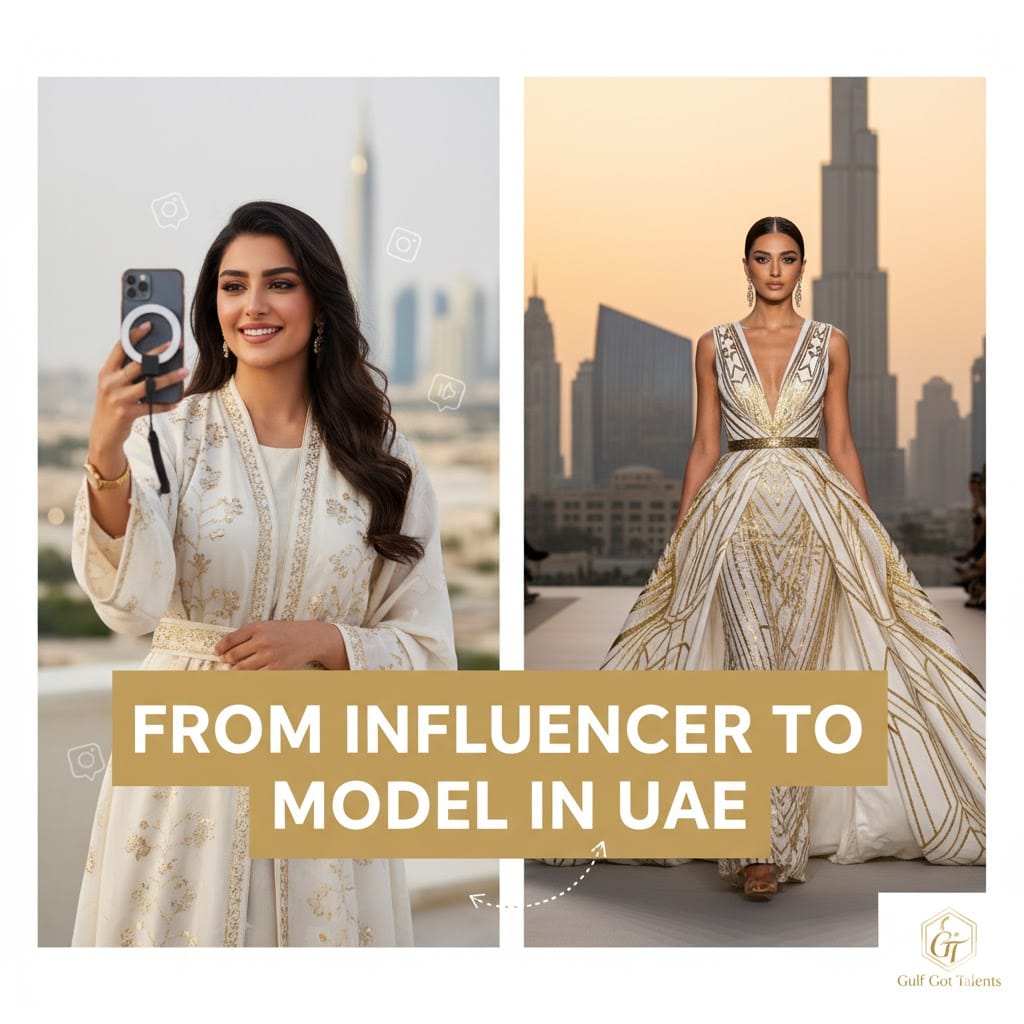
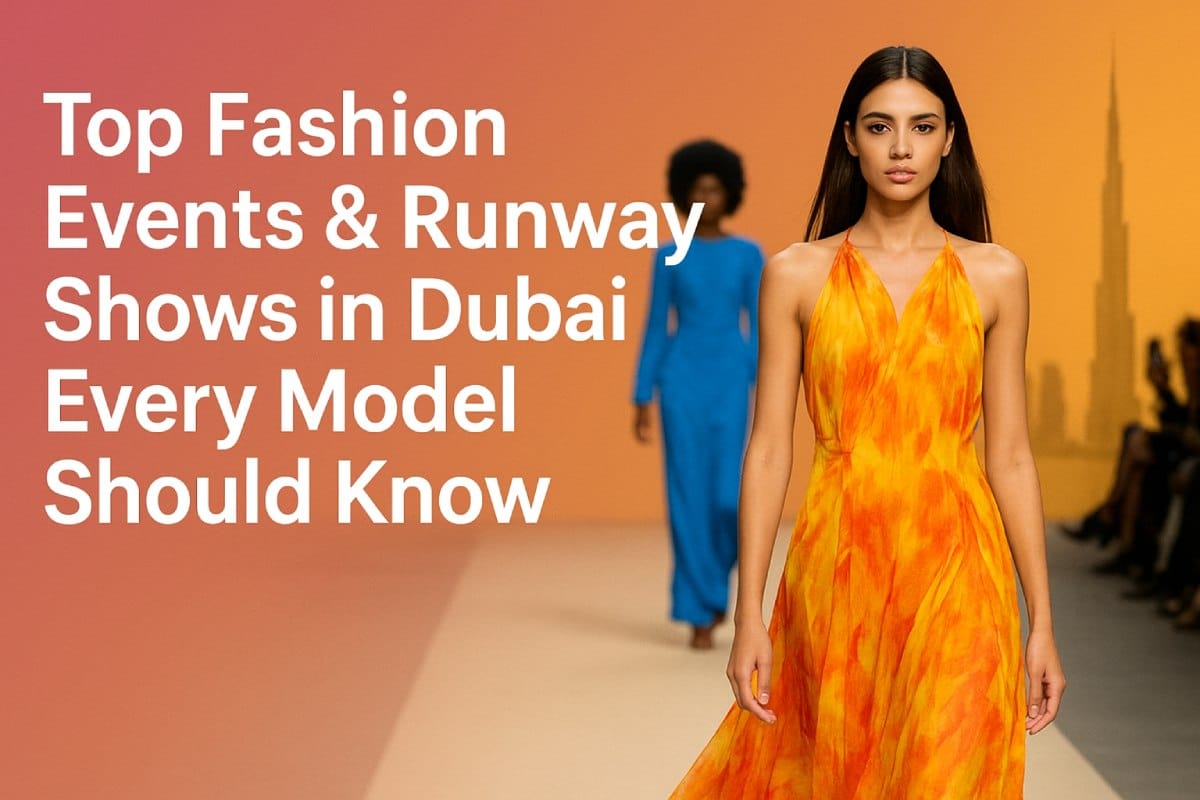
The modeling industry is evolving faster than ever. In 2025, artificial intelligence, digital avatars, and influencer-driven branding are reshaping how agencies, brands, and talents operate. The Gulf region is now one of the fastest-growing markets for hybrid modeling — where technology and human creativity meet. If you want to stay relevant in this new era, understanding how these trends connect is essential.
The Rise of AI Models
AI-generated models are no longer experimental. They are now part of real marketing campaigns, fashion editorials, and brand partnerships. These virtual figures look photorealistic, have consistent personalities, and can appear in any setting instantly.
Brands use AI models because they are efficient, customizable, and available 24/7. Major fashion labels have begun blending AI avatars with human models to reach both digital and physical audiences.
For example, Lil Miquela, one of the most famous AI influencers, has collaborated with luxury brands while maintaining millions of followers. The Gulf’s fashion industry is following suit, integrating AI-generated faces into advertising for luxury retail and digital media campaigns.
However, AI models will not replace human talent. They complement them. Brands still need real personalities to connect emotionally with audiences. That balance defines the future of modeling.
Virtual Models and Digital Avatars
Virtual models are digital representations created using 3D modeling and motion capture. These avatars allow brands to visualize collections, host digital runway shows, and create content without physical limitations.
For the Gulf market, virtual modeling is ideal. It reduces production costs, shortens timelines, and supports sustainability goals by minimizing travel and material use.
Digital fashion shows in Dubai and Riyadh are already testing this approach. Designers use virtual avatars to display their collections to global audiences in immersive 3D environments. The results are striking and efficient.
If you are a model, learning how to collaborate with digital production teams will be a valuable skill. Understanding green screens, motion sensors, and virtual camera systems will open new career paths.
You can also build a digital version of yourself to participate in virtual campaigns. Create your professional profile on Gulf Got Talents to connect with agencies adopting this technology.
Influencers as the New Models
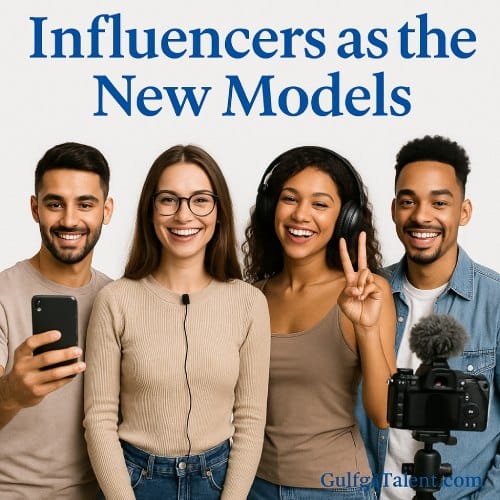
Influencers now play a direct role in shaping the modeling world. They are the modern face of digital branding because they combine appearance with influence.
A 2024 market report showed that 68 percent of Gulf fashion brands collaborate with influencers for campaigns rather than traditional model shoots. The reason is engagement. Influencers bring measurable reach, audience trust, and storytelling power.
Models today must think like creators. Posting polished photos is no longer enough. You need to understand brand alignment, audience engagement, and analytics. Influencers who manage this balance command higher rates and secure long-term collaborations.
If you are starting in this field, visit the FAQs section to learn how modeling and influencer careers intersect and how to use your profile for maximum visibility.
The Blurring Line Between Real and Digital
AI-generated models and human influencers often share the same space online. Some campaigns even mix both. Audiences find it increasingly difficult to tell who is real and who is virtual.
Brands use this to their advantage. They create immersive campaigns where virtual models interact with real humans in augmented reality. These experiences boost social engagement and expand brand identity.
This shift means you need to invest in digital literacy. Learn about content licensing, image rights, and AI collaboration tools. Digital-first models who understand both camera presence and virtual interaction will be in the highest demand.
How AI Helps Models Improve
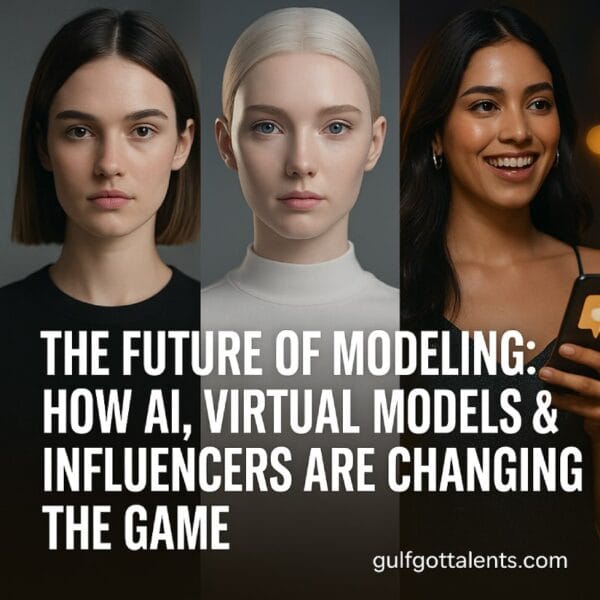
AI is not just replacing manual work; it is enhancing talent performance. Modeling agencies now use AI analytics to assess facial symmetry, posing patterns, and audience reactions.
Smart apps give feedback on lighting, expression, and posture in real time. Models can refine their portfolios faster by studying AI-assisted insights.
Some agencies are even using predictive algorithms to match models with brands based on campaign style and audience behavior. This data-driven system shortens casting time and increases success rates.
To access such opportunities in the Gulf region, create or update your profile on Gulf Got Talents. The platform connects verified models and brands using modern tools and professional standards.
Ethical Challenges in AI Modeling
The expansion of AI modeling brings responsibility. Data privacy, identity protection, and image manipulation are key concerns.
Some virtual models are based on composites of real people, raising questions about consent and ownership. Agencies must ensure ethical usage of digital likenesses and maintain transparency with audiences.
For individual models, it’s vital to understand your contract terms, especially when digital editing or replication is involved. Protecting your rights in virtual campaigns is as important as traditional photo licensing.
Hybrid Campaigns Are the New Standard
The most effective marketing strategies now combine real and digital talent. A campaign might use a human model for live shoots and an AI avatar for social extensions.
This hybrid format saves time and broadens reach. It also creates diverse content that performs better on social platforms.
Event organizers in the Gulf are already using hybrid castings. Virtual influencers promote events online, while real models appear at the venue. This blend maximizes exposure and engagement.
Models who adapt to this new system will lead future collaborations. Staying flexible, learning digital tools, and working with agencies that embrace innovation are key success factors.
Skills Models Need in the AI Era
To stay competitive, modern models need more than good looks. You need digital understanding, content skills, and brand awareness.
Essential skills include:
On-camera presentation for both photo and video.
Familiarity with social media metrics and analytics.
Ability to collaborate with photographers, editors, and digital artists.
Understanding of AI image tools and motion-capture basics.
Awareness of digital rights and licensing policies.
The new generation of models is multi-skilled. They manage their image, audience, and partnerships with precision.
How Brands Are Changing Their Strategy
Brands no longer depend only on photoshoots. They plan campaigns with long-term storytelling. Influencers and AI tools help them track audience response and personalize marketing content.
For example, a beauty brand might launch an ad featuring a virtual model online, then invite human models to live events for audience interaction. This approach builds stronger brand recall.
Gulf-based agencies are also investing in AR-based fashion ads and 3D lookbooks. These formats require both digital and real talent. Being available for both environments doubles your opportunity potential.
Future Predictions for the Modeling Industry
By 2030, AI integration will become a standard across modeling and entertainment. Virtual influencers will increase in number. Real models will continue to dominate storytelling roles that need emotion and authenticity.
Technology will also open new categories like digital twin modeling, where real models license virtual copies of themselves for online campaigns.
Talent networks that adopt these innovations early will dominate regional markets. Platforms like GulfGotTalents are already helping professionals position themselves for this shift.
If you are an aspiring model, now is the time to understand and adapt to this change. Your digital readiness will define your growth.
Key Takeaways
AI models and virtual influencers are transforming global fashion.
Human models remain essential for authenticity and storytelling.
Influencers with creative control are leading brand collaborations.
Ethical and transparent AI use will define credibility.
Digital literacy is now a required modeling skill.
Hybrid campaigns combining real and virtual models perform best.
The Gulf market is a prime hub for next-generation modeling opportunities.
Final Insight
The modeling world is no longer limited to the runway. It now exists across physical, digital, and virtual spaces. AI and virtual influencers are expanding creative possibilities for everyone.
Models who adapt, learn, and embrace technology will thrive. Brands will seek those who can balance authenticity with digital fluency.
To start your journey in this evolving industry, register on GulfGotTalents. Build your presence, connect with agencies, and prepare for the future of modeling — where technology and talent work side by side.